Savory Korean Beef Noodle Delight
Savory Korean Beef Noodle Delight is a vibrant dish that combines tender beef with perfectly cooked noodles in a luscious sauce. This recipe epitomizes the umami-filled flavors of Korean cuisine, making it a great choice for any dinner. Perfect for weeknight meals or special occasions, this dish is sure to impress. Get ready to indulge in a delightful culinary experience.


Why This Savory Korean Beef Noodle Delight Recipe Works
This recipe combines tender beef, fresh vegetables, and rich flavors that capture the essence of Korean cuisine. The key to its success lies in the balance of savory, spicy, and umami flavors, enhanced by a homemade sauce. Each ingredient plays a crucial role in creating a dish that is both satisfying and comforting.
The flavor profile of this dish is truly remarkable, marrying the heat of gochujang with the nuttiness of sesame oil. The texture of the beef, combined with the softness of the noodles and the crunch of the vegetables, creates a delightful contrast. Cooking everything in one pan allows the flavors to meld beautifully.
💡 Professional Tip
For the best result, marinate the beef in the sauce for at least 30 minutes before cooking to enhance its flavor and tenderness. Additionally, ensure your skillet is hot enough to achieve a good sear on the beef.
Frequently Asked Questions
Yes, you can prepare the beef and sauce in advance and store them separately in the refrigerator. When ready to serve, simply cook the noodles and stir-fry everything together for a quick meal.
If you don't have gochujang, you can use sriracha or a mixture of miso paste and chili powder as a substitute. Adjust the amount to taste, as these alternatives may differ in spiciness.
Stir-frying is the best method for this dish as it allows for quick cooking while maintaining the tenderness of the beef and crispness of the vegetables. A hot skillet ensures everything cooks evenly and retains its flavor.
To keep the beef tender, slice it against the grain and avoid overcooking. Marinating it beforehand also helps to break down tough fibers.
The dish is ready when the beef is no longer pink and the vegetables are tender yet still vibrant. The noodles should be heated through and coated in sauce.
This dish pairs well with a simple side salad or some steamed dumplings for a complete meal. You can also serve it with pickled vegetables for extra flavor.
Absolutely! You can increase the amount of gochujang or add some sliced fresh chili peppers when cooking. Adjust the spice level to suit your taste.
Store any leftovers in an airtight container in the refrigerator for up to 3 days. To reheat, simply place it in a skillet over medium heat until warmed through.
Recipe Troubleshooting Guide
Beef Is Too Tough
Problem: If the beef ends up chewy or tough, it can ruin the dish.
Solution: Ensure you slice the beef against the grain and marinate it well before cooking. Avoid overcooking to keep it tender.
Noodles Are Sticky
Problem: Sticky noodles can make the dish unappetizing.
Solution: Make sure to rinse the noodles under cold water after cooking to remove excess starch, and toss them with a bit of oil to prevent sticking.
Sauce Is Too Thin
Problem: A runny sauce can make the dish watery.
Prevention: To thicken the sauce, simmer it for an additional few minutes to reduce excess liquid or add a cornstarch slurry to achieve the desired consistency.
Flavor Is Off
Problem: If the dish lacks flavor, it may not be well-seasoned.
Recovery: Taste the dish before serving and adjust the seasoning with more soy sauce, salt, or gochujang to enhance the flavors.
Overcooked Vegetables
Problem: Overcooked vegetables can lose their vibrant color and crunch.
Prevention: Cook the vegetables just until tender but still crisp, and add them at the right time during cooking for the best texture.
Flavor Balance Issues
Too Sweet: If the dish is too sweet, add a splash of vinegar or a squeeze of lime juice to balance it.
Too Salty: If it's too salty, you can dilute the sauce with a little water or add more noodles to balance the flavor.
Bland: If the dish tastes bland, try adding more soy sauce or a touch of gochujang for extra depth.
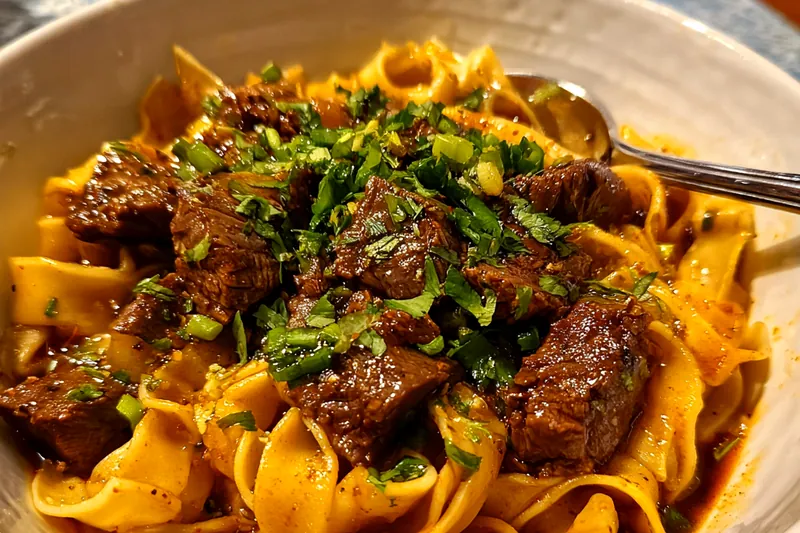
Choosing the Best Ingredients for Savory Korean Beef Noodle Delight
Selecting high-quality ingredients is essential for achieving an authentic taste. Choose fresh vegetables and well-marbled beef to ensure maximum flavor and tenderness. Look for rice noodles that are gluten-free and made from high-quality rice.
Prep your ingredients by washing and slicing them according to the recipe. Keeping everything organized will make the cooking process smoother and ensure even cooking.
Essential Ingredient Notes
- Beef Sirloin: Beef sirloin is ideal for this dish due to its tenderness and rich flavor. Look for cuts that are bright red and have a bit of marbling for added juiciness.
- Gochujang: Gochujang is a Korean chili paste that adds depth and heat to the dish. Choose a good-quality, authentic product for the best flavor.
- Rice Noodles: Rice noodles are gluten-free and provide a delicate texture that pairs well with the hearty beef and sauce. Make sure to cook them just until tender for the best results.
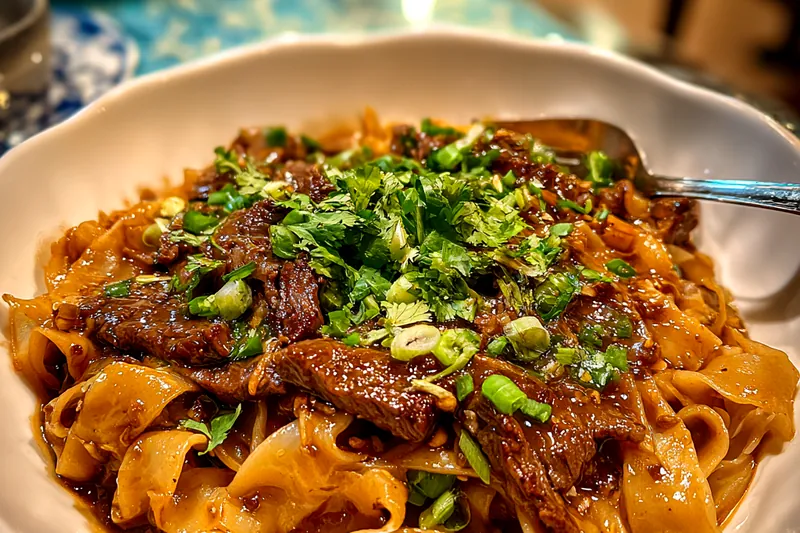
Mastering the Cooking Technique
Mastering the cooking technique for this dish is crucial for achieving the perfect balance of flavors and textures. Stir-frying at high heat allows the beef to sear beautifully while keeping the vegetables crisp.
Pay attention to timing and temperature; ensure your skillet is hot enough before adding the beef. Stir-frying quickly will preserve the vibrant colors and flavors of the ingredients.
The Secret to Perfect Savory Korean Beef Noodle Delight
The secret lies in the marination of the beef and the timing of adding the vegetables. Marinating enhances flavor and tenderness, while precise cooking ensures everything is perfectly cooked and flavorful.
Savory Korean Beef Noodle Delight
📋 Ingredients
Sauce Ingredients
- 2 tablespoons sesame oilAdds a nutty flavor that enhances the dish.
- 1 tablespoon soy sauceProvides saltiness and depth.
- 1 tablespoon gochujangAdds heat and a unique flavor.
- 2 teaspoons ginger, mincedOffers a warm and spicy note.
- 3 cloves garlic, mincedEnhances the dish with aromatic flavor.
Main Ingredients
- 1 lb beef sirloin, thinly slicedTender cut ideal for quick cooking.
- 8 oz rice noodles, cooked according to package instructionsBase of the dish, absorbs flavors.
- 1 cup broccoli floretsAdds color and nutrients.
- 1 red bell pepper, thinly slicedProvides sweetness and crunch.
- 2 green onions, choppedFor garnish and fresh flavor.
- 1 tablespoon sesame seeds, for garnishAdds crunch and visual appeal.
- Salt and pepper to tasteFor seasoning and flavor enhancement.
Instructions
Gather the Ingredients
Collect all the ingredients and prep them by slicing the beef and vegetables. Cook the rice noodles according to the package instructions and set aside.
Make the Sauce
In a bowl, mix together sesame oil, soy sauce, gochujang, minced ginger, and minced garlic. Whisk until well combined.
Cook the Beef
Heat a large skillet over medium-high heat. Add the sliced beef and cook for about 5-7 minutes until browned and cooked through.
Add Vegetables
Once the beef is cooked, add broccoli florets and red bell pepper to the skillet. Stir-fry for an additional 3-4 minutes until the vegetables are tender.
Combine Noodles and Sauce
Add the cooked rice noodles to the skillet, along with the sauce mixture. Toss everything together until the noodles are well coated.
Season to Taste
Taste the dish and add salt and pepper as needed. Make sure the flavors are balanced and the noodles are hot.
Serve the Dish
Transfer the beef noodle delight to serving plates. Garnish with chopped green onions and sesame seeds.
Enjoy!
Serve hot and enjoy your savory Korean beef noodle delight with family and friends!
Recipe Notes & Tips
Make-Ahead Instructions
You can prepare the beef and sauce in advance and store them separately in the refrigerator. When ready to serve, simply cook the noodles and stir-fry everything together for a quick meal.
Serving Suggestions
This dish pairs well with a simple side salad or some steamed dumplings for a complete meal. You can also serve it with pickled vegetables for extra flavor.
Recipe Variations
Feel free to add tofu or shrimp for a different protein option. You can also substitute the vegetables based on what you have on hand.