Ginger Garlic Noodle Soup
Ginger Garlic Noodle Soup is a delightful blend of flavors that warms the soul. This Asian-inspired dish features a savory broth infused with ginger and garlic, perfect for any dinner table. It's not only comforting but also packed with nutritious vegetables and rice noodles, making it a wholesome meal. You'll love how easy it is to prepare, making it a go-to recipe for busy weeknights.


Why This Ginger Garlic Noodle Soup Recipe Works
This Ginger Garlic Noodle Soup stands out for its harmonious balance of flavors and health benefits. The combination of ginger and garlic not only adds a delightful taste but also offers various health advantages, such as boosting the immune system and providing anti-inflammatory properties. Moreover, the use of fresh vegetables enhances both the nutritional value and the overall taste.
The technique of sautéing ginger and garlic before adding the broth elevates the flavors to new heights. It ensures that the soup is aromatic and flavorful from the first spoonful. By cooking the noodles directly in the broth, you also achieve a perfect texture that absorbs all the delicious flavors.
💡 Professional Tip
For an extra layer of flavor, consider adding a splash of fish sauce or teriyaki sauce along with the soy sauce. This will enhance the umami profile of the soup. Always taste and adjust the seasoning before serving to ensure the perfect balance.
Frequently Asked Questions
Yes, you can prepare the soup base ahead of time by making the broth and cooking the vegetables. Store it in the refrigerator for up to 3 days. When ready to serve, simply reheat the broth and add the noodles, cooking them just before serving for the best texture.
If you're looking for a gluten-free option, you can substitute soy sauce with tamari. For a lighter flavor, coconut aminos work well too. Just keep in mind that these alternatives might change the taste slightly, so adjust the seasoning accordingly.
The soup is done when the noodles are tender and fully cooked, usually within 5-7 minutes after adding them to the broth. You can taste a noodle to ensure it has the desired texture. The vegetables should be vibrant and slightly tender but not mushy.
Yes, you can freeze the soup without the noodles. Allow the soup to cool completely, then transfer it to an airtight container. It can be stored in the freezer for up to 3 months. When ready to eat, thaw in the fridge overnight and reheat on the stove, adding fresh noodles at that time.
This soup pairs beautifully with spring rolls or dumplings for a complete meal. You can also serve it alongside a simple salad or some crusty bread to soak up the delicious broth. For an added kick, consider serving it with chili oil or sriracha on the side.
Ginger Garlic Noodle Soup can be stored in the refrigerator for up to 3 days. Ensure it is kept in an airtight container to maintain freshness. Reheat thoroughly before serving.
Absolutely! You can prepare the base of the soup, such as the broth and vegetables, in advance. Just cook the noodles fresh when you're ready to serve, so they don’t become mushy. This makes it a great option for meal prep.
The best way to reheat Ginger Garlic Noodle Soup is on the stovetop. Pour the soup into a pot and heat over medium heat, stirring occasionally until warmed through. If the noodles have absorbed too much broth, you can add a bit of water or broth to loosen it up.
Recipe Troubleshooting Guide
Too Dry
Problem: The soup is lacking moisture and seems dry.
Solution: To fix a dry soup, add more broth or water to the pot gradually until you reach the desired consistency. Make sure to adjust the seasoning afterward.
Not Crispy Enough
Problem: The vegetables are not crispy and seem overcooked.
Solution: To maintain crispiness, add the vegetables towards the end of cooking, so they retain their texture. Alternatively, you can blanch them separately and add them just before serving.
Overcooked
Problem: The noodles are mushy and overcooked.
Prevention: To prevent overcooking, keep an eye on the noodles while they cook, and follow package instructions. If they do become mushy, serve with a little extra broth to balance the texture.
Undercooked Center
Problem: Some noodles remain hard in the center.
Recovery: Ensure that the noodles are fully submerged in the broth while cooking. If you notice undercooked noodles, let them simmer in the hot broth for a few extra minutes.
Burnt Exterior
Problem: Ingredients at the bottom of the pot are burnt.
Prevention: To prevent burning, always stir the ingredients regularly, especially when sautéing. If burning happens, lower the heat and add a bit of broth to deglaze the pot.
Flavor Balance
Too Sweet: If the soup tastes too sweet, add a splash of vinegar or lime juice to balance it out.
Too Salty: If the soup is too salty, dilute it with more broth or water.
Bland: To enhance bland flavors, add more spices, like chili flakes or ginger, and taste as you go.
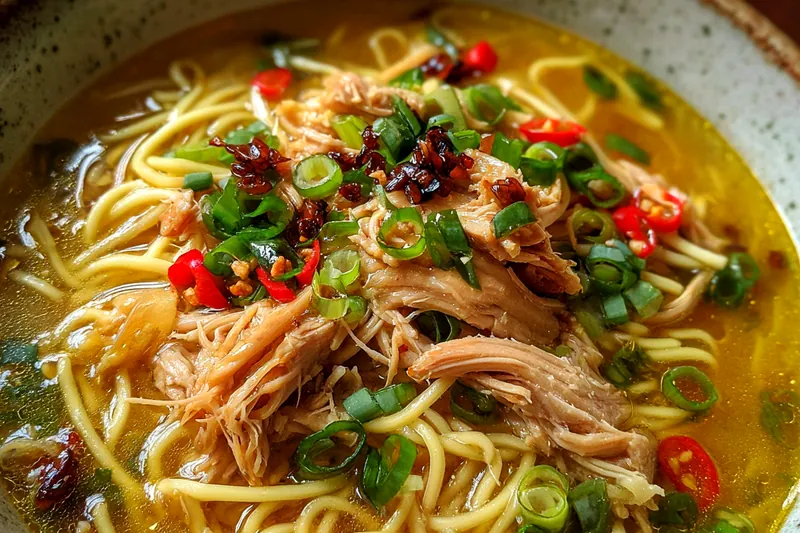
Essential Ingredients for Ginger Garlic Noodle Soup
The key ingredients in Ginger Garlic Noodle Soup are fresh ginger and garlic, which provide a robust flavor and health benefits. Rice noodles serve as the perfect base, soaking up the delicious broth. Fresh vegetables like bok choy, carrots, and mushrooms add texture and nutrients, making this soup a balanced meal.
Always opt for high-quality ingredients to ensure the best flavor. Look for firm, vibrant vegetables and fresh ginger with a fragrant aroma. Using low-sodium vegetable broth can help control the saltiness while still providing depth to the soup.
Essential Ingredient Notes
- Ginger: Fresh ginger is essential for this recipe, offering a warm, spicy flavor. When selecting ginger, choose firm pieces with smooth skin. Grating or mincing it also releases more flavor, so don’t skip this step.
- Garlic: Fresh garlic enhances the aromatic qualities of the soup. Use whole, unblemished garlic bulbs, and consider mincing it just before adding to the pot for maximum flavor. Avoid pre-minced garlic for the best results.
- Rice Noodles: Choose high-quality rice noodles for the best texture. Look for flat rice noodles, which hold up well in soup. Soak them in warm water beforehand to ensure they cook evenly and absorb the flavors of the broth.
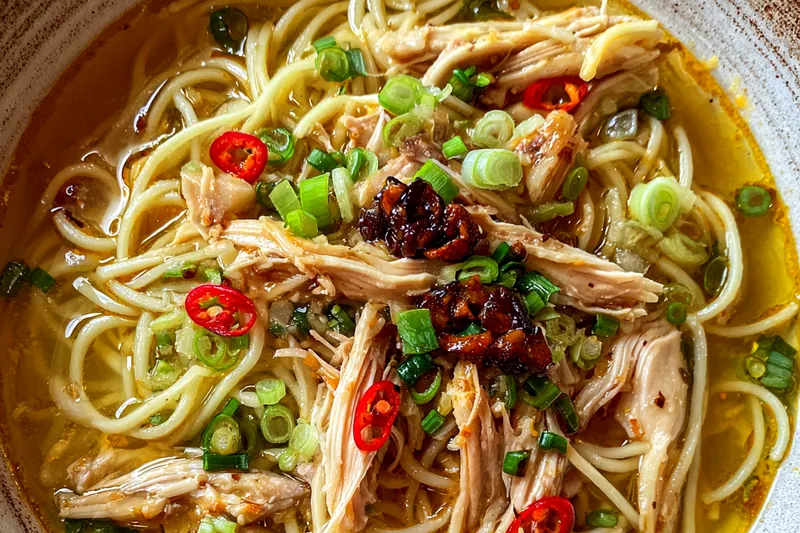
Step-by-Step Cooking Process
The cooking process for Ginger Garlic Noodle Soup is straightforward and rewarding. Start by sautéing ginger and garlic to create a flavorful base. Then, add your favorite vegetables and broth, bringing everything to a boil. This method allows the natural flavors to meld beautifully.
Cooking the noodles directly in the broth ensures they absorb all the flavors, resulting in a rich and satisfying soup. By following these steps, you’ll achieve a perfect balance of textures and flavors that make this dish so enjoyable.
Key Technique for Perfect Ginger Garlic Noodle Soup
The key technique for this soup is properly sautéing the ginger and garlic at the beginning. This step releases essential oils and flavors that will infuse the broth with an aromatic depth. Ensure you don't burn them, as this can lead to bitterness.
Ginger Garlic Noodle Soup
📋 Ingredients
Main Ingredients
- 1 cup soy sauceLow-sodium preferred
- 1 tablespoon sesame oilFor added flavor
- 1 teaspoon chili flakesFor heat
For the Sauce
- 1 lb rice noodlesSoaked in warm water
- 6 cups vegetable brothLow-sodium preferred
- 2 tablespoons ginger, mincedFresh
- 4 cloves garlic, mincedFresh
- 1 cup green onions, slicedFor garnish
- 1 cup carrots, juliennedFor sweetness
- 1 cup bok choy, choppedFor texture
- 2 tablespoons soy sauceFor seasoning
- 1 tablespoon sesame oilFor flavor
- 1 teaspoon chili flakesFor spice
- 1 lime, juicedFor brightness
- Fresh cilantro for garnishOptional
Instructions
Prepare the Broth
In a large pot, heat sesame oil over medium heat. Add minced ginger and garlic, sauté until fragrant.
Add Vegetables
Add sliced carrots, bok choy, and mushrooms to the pot. Sauté for about 5 minutes.
Pour in Broth
Pour in the vegetable broth and bring it to a boil. Stir in the soy sauce and chili flakes.
Cook the Noodles
Add the rice noodles to the boiling broth and cook according to package instructions, usually about 5-7 minutes.
Add Green Onions
Once the noodles are cooked, stir in the green onions and season with salt and pepper.
Finish with Lime
Remove from heat and add lime juice for a fresh zing.
Serve
Ladle the soup into bowls and garnish with fresh cilantro.
Enjoy
Serve hot and enjoy your delicious Ginger Garlic Noodle Soup!
Recipe Notes & Tips
Storage Tips
To store Ginger Garlic Noodle Soup, allow it to cool completely before transferring to an airtight container. It can be kept in the refrigerator for up to 3 days. When reheating, add a bit of broth or water to restore the consistency if needed.
Serving Suggestions
Serve Ginger Garlic Noodle Soup hot, garnished with fresh cilantro and lime wedges. Pair it with spring rolls or dumplings for a complete meal. For added spice, offer chili oil or sriracha on the side.
Recipe Variations
Feel free to customize the soup by adding your favorite proteins like tofu, shrimp, or chicken. You can also use different vegetables such as bell peppers or snap peas. Experiment with different noodles, like udon or soba, for a unique twist.