Fresh Strawberry Cream Swiss Roll
A light and airy vanilla sponge cake rolled with fresh whipped cream and sweet strawberries. The perfect elegant dessert for spring and summer gatherings.


The Secret to a Crack-Free Roll
The most intimidating part of making a Swiss roll is the fear of cracking. The secret lies in rolling the cake while it is still hot from the oven. This trains the sponge's 'memory' to hold the spiral shape. Once cooled, it becomes flexible enough to unroll, fill, and re-roll without snapping.
Additionally, not overbaking the sponge is crucial. A dry cake will crack instantly. The sponge should be just set and springy to the touch. Using oil in the batter also helps maintain moisture and flexibility compared to butter-based sponges.
💡 Professional Tip
Do not overfill the roll. While it's tempting to add loads of cream and fruit, too much filling will push out the sides and make the roll difficult to shape tight. Leave a small border at the end of the roll without filling.
Frequently Asked Questions
Usually, this happens if the cake was overbaked (too dry) or if you waited too long to roll it. It must be rolled immediately while hot and steamy.
Fresh is best for the filling as frozen berries release too much water, making the cream soggy. You can use frozen berries to make the drizzling sauce, however.
It's best eaten within 24 hours while the sponge is fluffy, but it can be stored in an airtight container in the fridge for up to 3 days.
You can bake and roll the cake in the towel a day ahead. Keep it wrapped at room temperature. Unroll and fill it on the day of serving.
Make sure you whip the cream to stiff peaks. You can also add a teaspoon of stabilizer (like gelatin or cream of tartar) or use mascarpone cheese mixed in for a firmer filling.
A standard 10x15 inch jelly roll pan is ideal. If you use a larger baking sheet, the cake will be too thin and may dry out.
Absolutely! Raspberries, blueberries, sliced peaches, or mangoes work beautifully in this recipe.
Refrigerate the assembled roll for at least an hour to set the cream. Use a sharp serrated knife and wipe the blade clean between every cut.
Recipe Troubleshooting Guide
Sponge is Rubber-like
Problem: The cake texture is tough rather than fluffy
Solution: You likely overmixed the batter after adding the flour. Fold gently just until combined to keep the air bubbles intact.
Skin Peeling Off
Problem: The brown surface peels off onto the towel
Solution: Dust the towel generously with powdered sugar before inverting the cake. This prevents sticking.
Filling Squirting Out
Problem: Cream spills out when re-rolling
Prevention: You rolled it too tightly or overfilled it. Roll gently without excessive pressure and leave the last inch of the cake bare.
Soggy Bottom
Problem: The bottom of the roll is wet
Recovery: Ensure your strawberries are washed and thoroughly dried before chopping. Wet fruit will leak juice into the sponge.
Flat Cake
Problem: The sponge didn't rise properly
Prevention: The eggs weren't beaten enough. They need to reach the 'ribbon stage' where the batter falls in thick trails that sit on the surface.
Flavor Adjustments
Too Sweet: Reduce sugar in the whipped cream filling
Too Salty: Not applicable, but ensure you used unsalted butter/oil
Bland: Increase vanilla extract or add lemon zest to the batter
Choosing the Best Berries
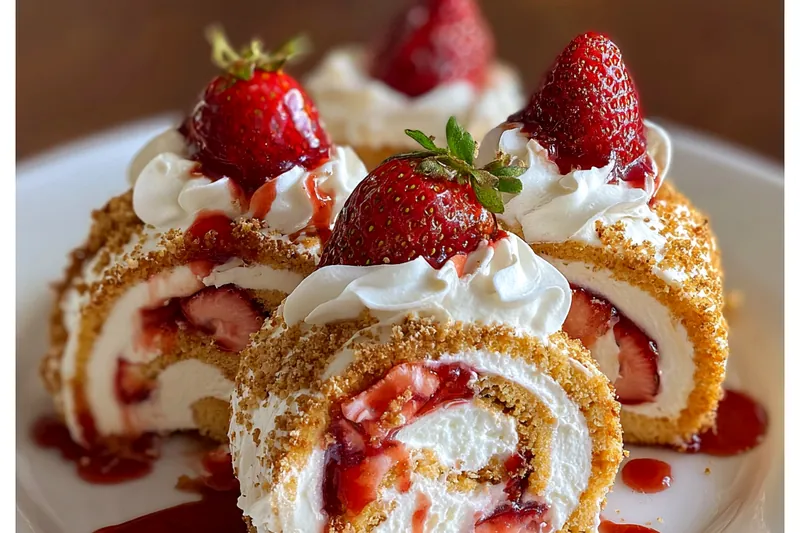
Since this recipe relies heavily on fresh fruit, the quality of your strawberries matters. Look for berries that are bright red all the way to the stem, firm, and fragrant. Small to medium berries often have better flavor and less water content than massive ones.
If your strawberries are a bit tart, macerate them (toss with a tablespoon of sugar) for 10 minutes before using. Just be sure to drain off the excess liquid before adding them to the cream so the roll doesn't become soggy.
Essential Ingredient Notes
- Heavy Cream: Use cream with at least 36% fat content for the most stable whipped filling. Ensure it is very cold before whipping.
- Cake Flour: Cake flour has less protein than all-purpose flour, resulting in a much more tender and lighter sponge.
- Vanilla Extract: Use pure vanilla extract or vanilla bean paste for the best flavor, as it is the primary flavoring for the sponge.
Assembly Techniques
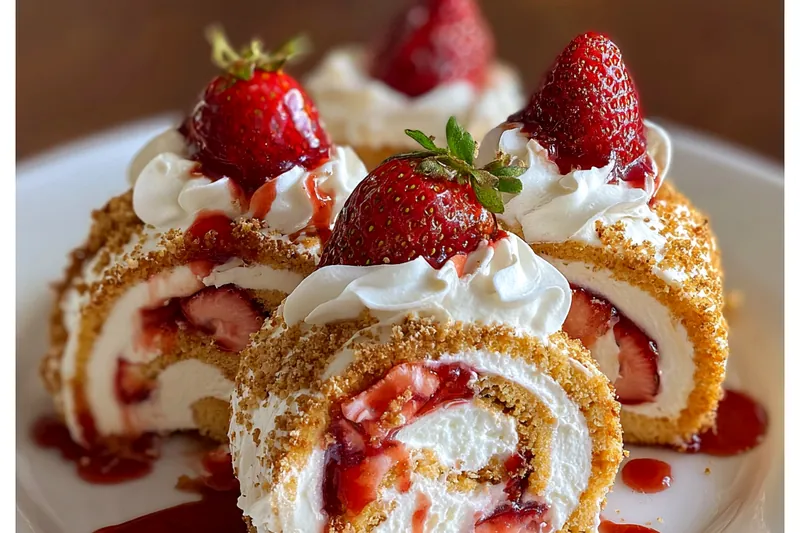
When assembling, temperature is key. The cake must be completely cool, or the whipped cream will melt into a puddle. Conversely, the heavy cream should be whipped to stiff peaks—stiffer than you would for a topping—to provide structural support for the roll.
For a bakery-style finish like the photo, reserve some cream to coat the outside or pipe on top. Adding a sprinkle of cookie crumbs or cake crumbs to the exterior cream adds a lovely textural contrast to the soft sponge.
The Ribbon Stage
When beating the eggs and sugar, beat until the mixture is very pale and falls off the whisk in a ribbon that holds its shape for 3 seconds. This incorporates the air needed for the rise.
Fresh Strawberry Cream Swiss Roll
📋 Ingredients
Sponge Cake
- 300ml Heavy CreamCold, for whipping
- 40g Powdered SugarTo sweeten the cream
- 300g StrawberriesFresh, chopped for filling
- Strawberry SauceFor drizzling on top
- Graham CrumbsOptional, for exterior texture
Filling & Decoration
- 4 Large EggsRoom temperature
- 100g Granulated SugarFor structure and sweetness
- 90g Cake FlourSifted, for tenderness
- 30ml Vegetable OilKeeps the cake flexible
- 45ml MilkWhole milk is best
- 1 tsp Vanilla ExtractFlavor enhancer
- 1/2 tsp Baking PowderLeavening agent
Instructions
Prepare the Sponge
Preheat oven to 375°F (190°C). Line a 10x15 inch jelly roll pan with parchment. Whisk eggs and sugar on high speed for 5-7 minutes until pale and tripled in volume. Fold in dry ingredients gently.
Bake the Cake
Fold in combined milk and oil. Pour into pan, smooth top, and bake 12-15 minutes until springy. Do not overbake.
Roll the Cake
Invert hot cake onto a sugar-dusted towel. Peel off parchment. Roll up tightly with the towel from the short end. Let cool completely.
Make Filling
Whip heavy cream, powdered sugar, and vanilla to stiff peaks. Unroll cooled cake. Spread cream and top with chopped strawberries.
Finish and Serve
Re-roll cake without towel. Top with more cream, whole berries, and sauce. Chill for 1 hour before slicing for clean cuts.
Recipe Notes & Tips
Serving
Serve chilled. Slices look best when cut with a warm knife (dipped in hot water and wiped dry).
Variations
Add 2 tbsp cocoa powder to the flour for a chocolate version, or use mascarpone cream for a richer filling.
Leftovers
Store in the fridge. The sponge may absorb moisture from the cream by day 2, becoming more like a trifle cake texture, which is still delicious.