Crispy Coconut Crusted Salmon with Pineapple Salsa
Tropical crispy coconut crusted salmon fillets topped with a fresh, zesty pineapple salsa and a savory soy glaze. A restaurant-quality meal ready in 30 minutes.

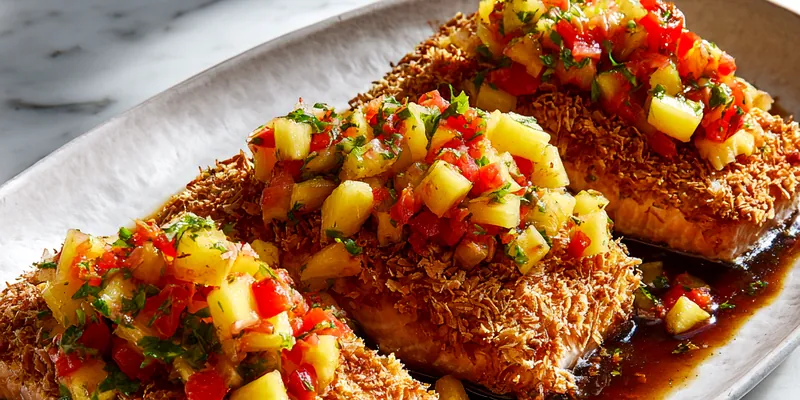
Achieving the Perfect Crust
The secret to a crust that doesn't burn before the fish cooks is the ratio of panko to coconut. Pure coconut can burn quickly due to its sugar content. By mixing it with panko, you get extra crunch and a buffer that allows for a golden, even toast.
Pressing the coating firmly into the fish is crucial. Don't just sprinkle it on; use the palm of your hand to adhere the coconut flakes to the egg wash. This ensures the crust stays intact during the flipping process.
💡 Professional Tip
If your fillets are very thick, sear the crust side until golden, then flip and finish in a 400°F oven for 5 minutes. This prevents the coconut from burning while ensuring the center is cooked.
Frequently Asked Questions
It is not recommended. Sweetened coconut burns much faster and makes the dish overly sugary. Unsweetened shredded coconut or desiccated coconut provides the best savory balance.
You can easily swap cilantro for fresh mint or parsley. Mint adds a wonderful fresh coolness that pairs well with pineapple.
Yes! Spray the basket and the top of the fish with oil. Air fry at 375°F for 10-12 minutes, depending on thickness, until the crust is golden.
The salmon should flake easily with a fork and be opaque pink in the center. Internal temperature should reach 145°F (63°C).
Absolutely. The salsa actually tastes better if made 2-3 hours ahead as the flavors marry. Drain any excess liquid before topping the fish.
Coconut rice, jasmine rice, roasted asparagus, or simple steamed bok choy are excellent accompaniments that soak up the extra sauce.
Yes, just ensure it is completely thawed and patted very dry with paper towels before breading, otherwise the crust will slide off.
It has a mild kick if you include the jalapeno in the salsa. Remove the seeds and ribs of the pepper to reduce heat, or omit it entirely for a kid-friendly version.
Recipe Troubleshooting Guide
Soggy Crust
Problem: The coconut coating is mushy instead of crispy
Solution: Ensure oil is hot enough before adding fish (it should shimmer). Don't overcrowd the pan, and serve immediately. Do not cover the hot fish.
Burnt Coconut
Problem: Coconut blackens before fish is cooked
Solution: Heat was too high. Lower to medium. If it darkens too fast, finish the cooking in the oven as noted in the professional tip.
Breading Falling Off
Problem: Crust separates from the salmon
Prevention: Pat the salmon very dry before the flour step. The flour helps the egg stick, which helps the coconut stick. Let the breaded fish sit for 5 minutes before cooking.
Dry Fish
Problem: Salmon is tough and dry
Recovery: Overcooking is the culprit. Salmon cooks quickly. Remove it from heat just as the center turns from translucent to opaque.
Salsa Too Watery
Problem: Salsa is making the plate messy
Prevention: Pineapple releases juice when salted. Use a slotted spoon to serve the salsa onto the fish, leaving the excess liquid in the bowl.
Flavor Adjustments
Too Sweet: Add more lime juice or a splash of rice vinegar to the salsa
Too Salty: Serve with unseasoned rice or add more fresh pineapple chunks
Bland: Add a pinch of salt to the finished fish or increase the ginger in the glaze

Selecting Fresh Seafood
When buying salmon, look for firm flesh that springs back when pressed. The color should be vibrant pink or orange, not dull. If buying whole fillets, ask for the center cut, as the uniform thickness ensures even cooking compared to the thinner tail pieces.
For the salsa, fresh pineapple is superior to canned. Canned pineapple is often too soft and sweet. A ripe fresh pineapple will smell sweet at the base and have leaves that pull out easily. The acidity of fresh fruit cuts through the rich coconut crust perfectly.
Essential Ingredient Notes
- Salmon Variety: Atlantic salmon is fattier and more forgiving, while Sockeye is leaner with a stronger flavor. Atlantic is generally preferred for this recipe to keep it moist.
- Coconut Type: Use 'unsweetened shredded' or 'desiccated' coconut. Flaked coconut is too large and won't adhere well; sweetened coconut will burn.
- Panko Breadcrumbs: Japanese-style panko is lighter and airier than traditional breadcrumbs, ensuring the crust is crispy rather than heavy.
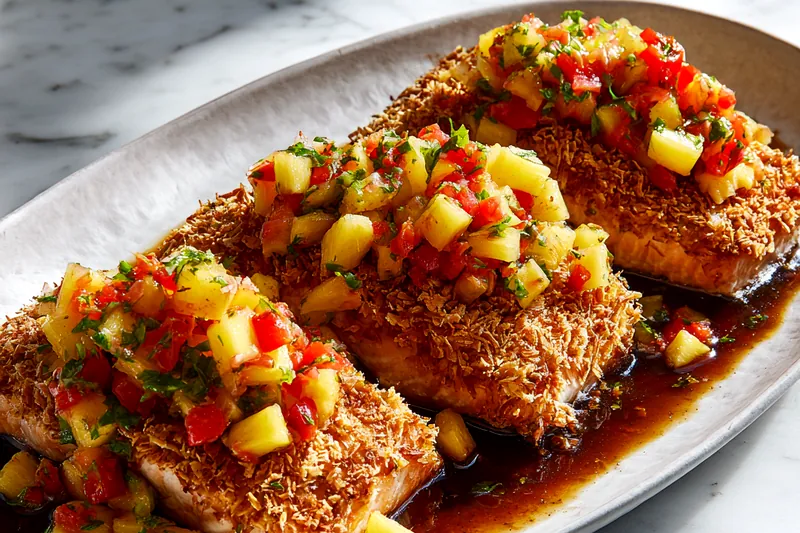
Mastering the Pan-Sear
Temperature control is vital when working with sugar-heavy ingredients like coconut. You want a medium heat—enough to sizzle, but not smoke. If the oil smokes, it's too hot and will flash-burn the coconut.
The glaze brings the dish together. It can be drizzled on the plate or over the fish, but avoid pouring it directly onto the crispy crust right before serving, or you'll lose that wonderful crunch you worked to achieve. Place the sauce *under* the fish for the best presentation.
The 3-Step Breading
Flour, then Egg, then Coconut. Don't skip the flour; it's the glue that holds the egg, which holds the coconut. Shake off excess at every step to keep the coating light.
Crispy Coconut Crusted Salmon with Pineapple Salsa
📋 Ingredients
For the Salmon
- 250g fresh pineapple, dicedSmall cubes for easy eating
- 1 red bell pepper, dicedAdds crunch and color
- 1/4 red onion, finely choppedFor sharpness
- 3 tbsp fresh cilantroChopped fine
- 60ml soy sauceBase for the savory glaze
- 30ml honeyTo sweeten the glaze
- 1 lime, juicedUsed in both salsa and glaze
For the Salsa & Glaze
- 4 salmon fillets (6oz each)Skin removed, center cut
- 60g shredded coconutUnsweetened for best results
- 60g panko breadcrumbsAdds extra crunch
- 2 large eggsBeaten, for binding
- 30g flourAll-purpose, for dredging
- 1 tsp garlic powderMixed into flour
- Salt and PepperTo taste
Instructions
Prepare Salsa
In a medium bowl, combine diced pineapple, red bell pepper, red onion, cilantro, jalapeno (if using), and half the lime juice. Toss to combine and season with a pinch of salt. Set aside to let flavors meld.
Set Up Breading Station
Prepare three shallow bowls. In the first, place flour mixed with garlic powder, salt, and pepper. In the second, the beaten eggs. In the third, combine panko breadcrumbs and shredded coconut.
Coat Salmon
Dredge each salmon fillet in the flour, shaking off excess. Dip into the egg wash, then press firmly into the coconut-panko mixture to coat evenly on the top and sides.
Cook Salmon
Heat oil in a large non-stick skillet over medium heat. Place salmon fillets crust-side down. Cook for 3-4 minutes until golden brown. Flip carefully and cook for another 4-5 minutes until salmon is cooked through and opaque.
Make Glaze and Serve
Whisk together soy sauce, honey, ginger, and remaining lime juice. Drizzle sauce onto the serving platter. Place salmon on top and spoon a generous amount of pineapple salsa over the crust. Serve immediately.
Recipe Notes & Tips
Storage
Leftover salmon can be stored in the fridge for 2 days. Reheat in an oven or air fryer to recrisp the coating. The salsa keeps well for 3 days.
Serving Suggestions
Serve over a bed of coconut rice or cauliflower rice. Steamed snap peas or broccoli make great green sides.
Glaze Alternative
If you prefer a creamy sauce, mix mayo with sriracha and a squeeze of lime for a spicy mayo drizzle instead of the soy glaze.